
Why Temple Grandin’s Message Matters Now More Than Ever
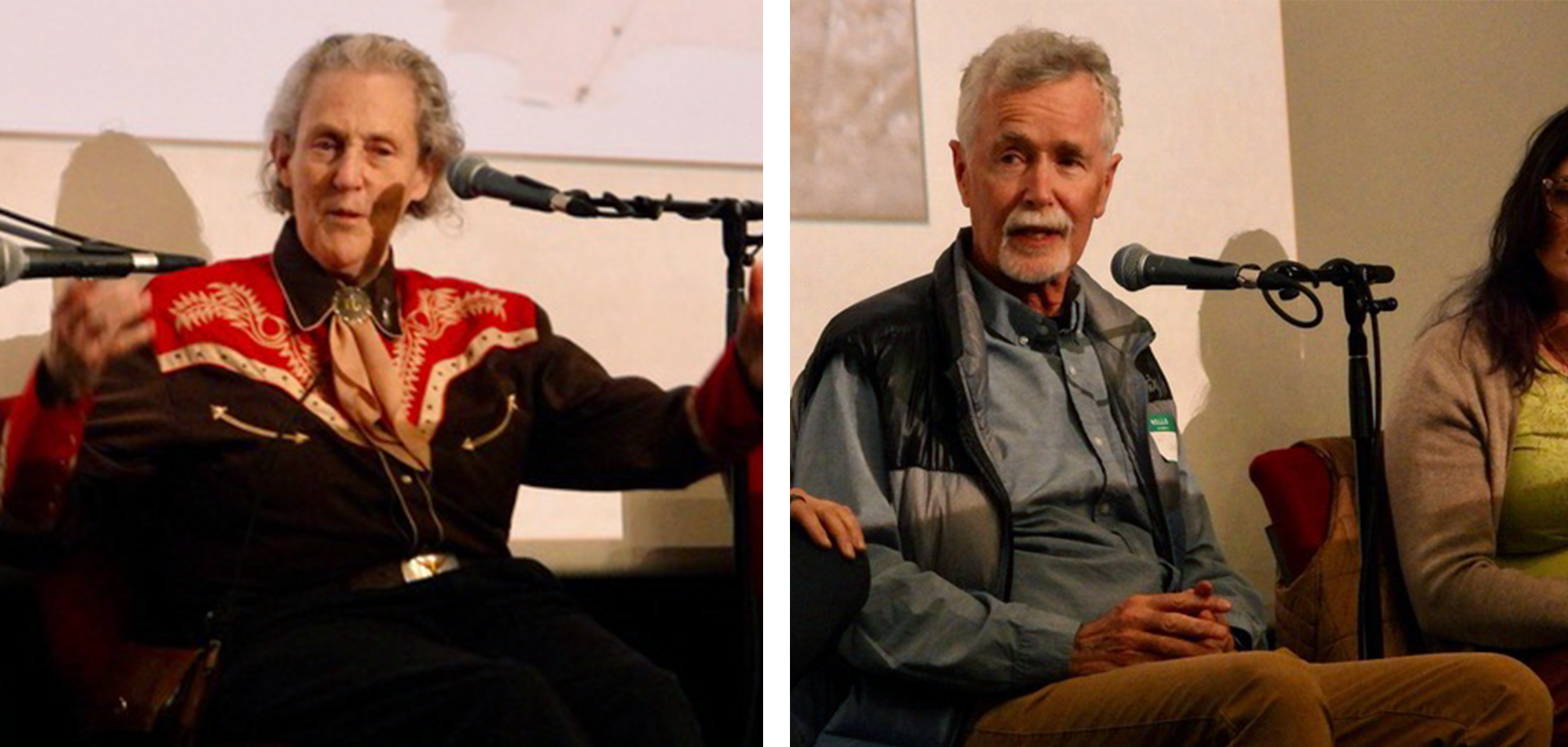
Grandin and White at a recent panel event: Reframing Neurodivergence: Strengths-Based Approaches that Celebrate the Gifts of Young Learners.
We need to be encouraging young people—especially those who are neurodivergent, but truly all young adults—to pursue hands-on work. To build real skills. To engage in meaningful, practical experiences that connect effort to outcome.
That’s Dr. Temple Grandin’s message from a recent panel event, where our Director of Enrollment Dr. Will White and several others shared the stage to discuss Reframing Neurodivergence: Strengths-Based Approaches that Celebrate the Gifts of Young Learners.
Dr. Grandin is a renowned figure in autism advocacy and animal science. From her groundbreaking work in livestock handling to her decades of neurodiversity advocacy, Grandin has reshaped how we understand the "autistic brain." She didn’t speak until she was three years old but ultimately became a prominent author and speaker. She has been inducted into the National Women’s Hall of Fame and the American Academy of Arts and Sciences.
Grandin’s message is more relevant today than ever, especially for young adults seeking alternative career paths through vocational training and the trades.
The Power of Hands-On Learning
At The Trade, we see firsthand how hands-on learning unlocks potential in young adults who may struggle in a traditional classroom setting. For many neurodivergent learners, the abstract nature of academic theory can be a barrier. Grandin’s success is a testament to what happens when we prioritize practical skills and tangible outcomes.
She speaks openly about the challenges she faced growing up—not just socially, but in areas like planning, organization, and executive functioning. These are critical life skills that are often assumed rather than explicitly taught.
Through hands-on learning, mentorship, and real-world experience, Grandin was able to channel her strengths into a groundbreaking career. If she was a young adult today, we think she would thrive in a program like The Trade.
A Timely Reminder
Grandin’s encouragement of hands-on work comes at an important moment.
Many young people today feel uncertain about their future. Traditional pathways do not always fit. This event reinforced a simple but powerful idea: There is more than one path to success.
For many young adults, that path begins with learning a trade.
Why This Matters
The Trade is not positioned as a replacement for college, but as an alternative path for a stable, fulfilling career.
It creates space for young adults who benefit from experiential learning, mentorship, and skill development in real-world settings.
It recognizes that intelligence is expressed in many ways. Success should not be defined by a single model, and Grandin’s career is the perfect example.
Final Thought
This panel event highlighted a growing shift in how we think about education, work, and development. The goal is not to fit young people into existing systems. It is to build pathways that meet them where they are. Then help them move forward with confidence, competence, and purpose.
That is the work of The Trade, and it is work that is more relevant than ever.
